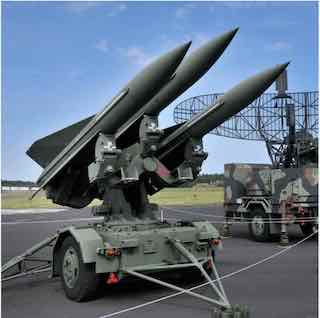
HAWK Missiles in Ukraine
More than three years after Russia initiated its full-scale invasion of Ukraine, the conflict continues to demonstrate the evolving role of air defense in modern warfare. Missile and unmanned aerial system threats have become persistent features of the conflict, requiring layered and adaptive defensive responses.
Ukraine has been subjected to sustained missile and drone attacks, many of which are intercepted by its air defense forces. Recent reporting confirms the operational employment of U.S.-designed HAWK surface-to-air missiles by Ukrainian crews. Originally developed during the Cold War, the HAWK system has demonstrated continued relevance against certain aerial threats when properly maintained and integrated with modern command-and-control networks.
The United States withdrew HAWK missiles from active service around 1990; however, substantial numbers remain in long-term storage. To strengthen Ukraine’s air defense capacity, U.S. authorities have approved the transfer of missiles from this legacy stockpile. The system’s reintroduction into operational service illustrates the enduring value of established defense technologies in contemporary conflicts.
Technical Sidebar: HAWK Surface-to-Air Missile System
System Name: HAWK (Homing All the Way Killer)
Role: Medium-range, radar-guided surface-to-air missile system
Initial Deployment: Late 1950s (United States and NATO allies)
Primary Mission: Defense against aircraft and certain cruise missile threats
Key Characteristics:
• Radar-guided missile using semi-active homing
• Modular system consisting of search radar, tracking radar, fire control, and launchers
• Designed for fixed and semi-mobile air defense roles
• Upgraded multiple times during its service life to address evolving threats
Historical Significance:
The HAWK system served as a cornerstone of U.S. and NATO air defense throughout the Cold War. Its continued use in modern conflicts demonstrates how legacy systems, when refurbished and adapted, can supplement contemporary air defense architectures.
Watch on YouTube